Coney Island Blog - News

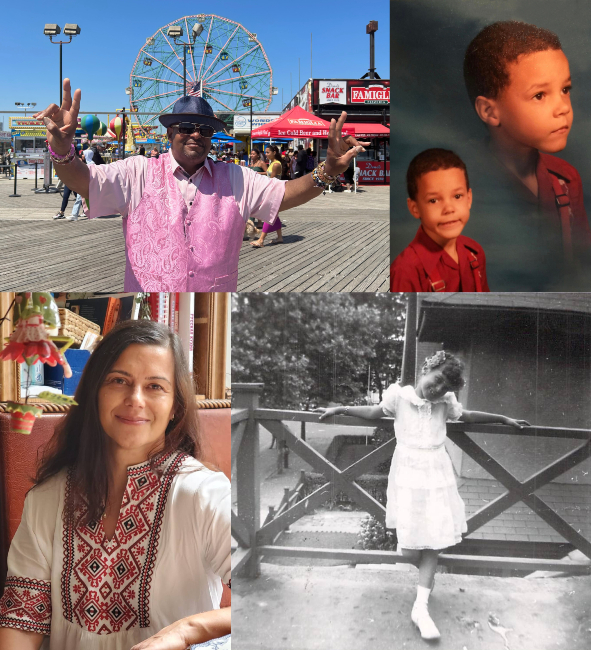
As we near the end of 2023, the Coney Island History Project pays tribute to five Brooklynites that we lost this year who recorded their stories for our oral history archive: Eliot Wofse, Michael Onorato, Ralph Perfetto, Santos Torres, and Sofya Lobova. Their stories captivated, inspired and informed us and they will never be forgotten.
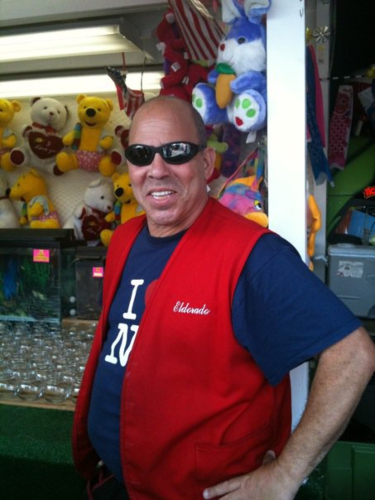
Eliot Wofse

Eliot Wofse (1956 - 2023)

“Well, in the early sixties, my brothers worked for different people in Coney Island and I would visit them. I was a little kid. And how I started was, my brothers worked in the balloon game and I would go into the back of the balloon game and blow up the balloons. There was no machines in those days to blow up the balloons. I spent the whole day blowing up the balloons and I got good money cause in those days, you're lucky if you got paid 50 cents an hour, I was getting paid almost $2.00 an hour. So they were paying me to blow up these balloons in the back of the house, because at my age, which was about eight years old at the time, you couldn't be in front of the house.” – Eliot Wofse

Eliot Wofse grew up in Luna Park Houses across the street from the amusement area and by the time he was a teenager he had learned how to run any game. He recalls the 1960s through the mid- '70s, when he made good money, and the "scary times,” the late 1970s and early '80s, when "the City forgot about Coney Island." After a long hiatus, Wofse returned to Coney and successfully operated the fishbowl game in 2010 and 2011. In his oral history, he reflects on his philosophy of running amusement games and interacting with customers, and the unsustainable cost of private proprietors like himself doing business in the new, corporatized Coney Island.
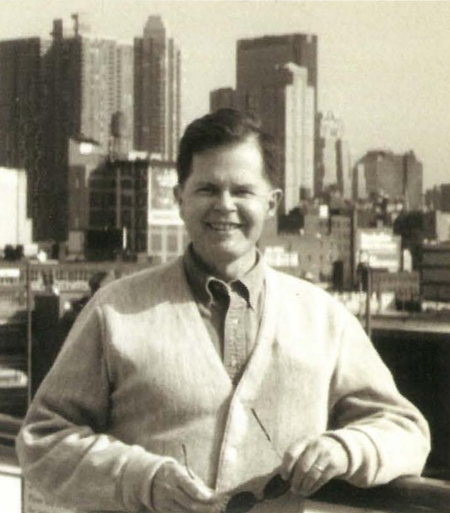
Michael Onorato

Michael Onorato (1934 - 2023)

“Once I got a little older that I could come down to Coney Island by myself on the subway, I sometimes would stand out on the Parachute Jump's platform. And if someone came along that didn't have anybody, the ride attendant would sort of gimme a 'Hey, Mike! Mike, would you like to ride? Go up with the guy.' Oh yeah, sure, sure. You know? Yeah. And then of course sometimes when I went up on a date they'd stop the ride going up, you know, thinking that that was fun for me. Well, my father spotted that once or twice and he told them, 'Don't you ever do that again. Because no one's gonna understand that he's the boss's son. You're giving him a time to kiss the girl. You know what I mean?' He said, 'That's not fun for me, the manager. Send him up. He goes up and he comes down like anyone else.'”—Michael Onorato

Michael Onorato was the son of James Onorato, who was the general manager of Steeplechase Park from 1928 to 1964, when it closed. He remembers the park in vivid detail and describes growing up there. In his oral history, he gives a start-to-finish account of going on the Parachute Jump and the Steeplechase ride including details long forgotten by most visitors about how the staff operated the rides.
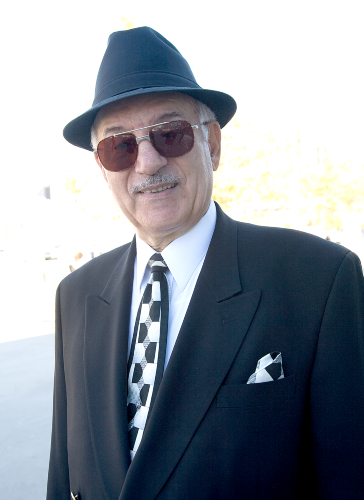
Ralph Perfetto photo by Charles Denson

Ralph Perfetto (1934 – 2023)

“I was born at 2711 West 16th Street. I was delivered by a midwife in a house owned by my maternal grandparents. In fact, it's the house that my mother was born in 22 years to the day before me. And the family story has it, that my mother was in labor. She had her oldest sister with her, who was a nurse in World War I so was familiar with how to take care of her. And my mother had an urge for a Nathan's hot dog. So she said to my father Frank, I feel like having a hot dog. My father said I'll go get it. But on the way to Nathan's, he got involved in a card game. He had a friend who was the father of Lou Salica, the three-time bantamweight champ. Got involved in a card game. And when my aunt finally ran up to him and said, the midwife just delivered you a nice son, he ran up and got the hot dog. At that point my mother wasn't really interested in the hot dog. Basically, so that was my start.” – Ralph Perfetto

In his oral history, Ralph Perfetto describes the diversity of West 16th Street in Coney Island, where he grew up. He talks about the various jobs he had as a young man --picking vegetables at local farms where the Coney Island train yards are located now and tending to the horses at the local stable. In the 1970s, Perfetto led the fight to save Coney Island’s Italian neighborhood from urban renewal, including the house where he was born. He went on to become the area’s Democratic District Leader. In recent years, he found a second career, as an actor named Raffaelo Perfetto, in the movie The Irishman and The Good Wife.
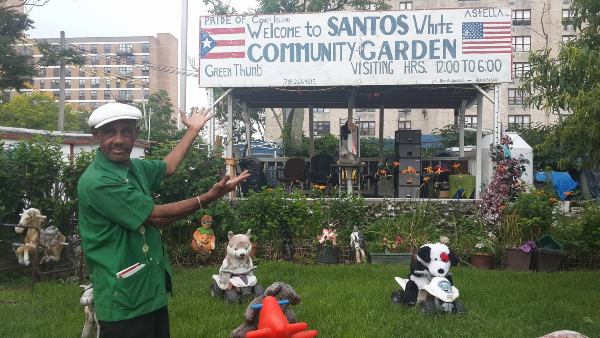
Santos Torres

Santos Torres (1948 – 2023)

“I help everybody in the community, whenever they need any vegetable, I give it to them. I don't sell nothing. I give it to them. Eggs. I give them to the community. I give them everything I grow here, I give it, you know, I give it away. All the neighbors, everybody comes they have a pantry. Santos, can I get some red peppers? Yeah. Yeah. Yeah. Santo,s can I get some duck eggs? Yeah. Yeah. Okay. Take your eggs. Yeah. Yeah. Santos, can I get some collard greens? Can I get the cabbage? Can I get the okra? I give it away. Yeah. I just share with the community. That's what I do here. I share with everybody.” – Santos Torres

Santos Torres lived in Coney Island since 1973, playing music on the Boardwalk and tending the Santos White Community Garden. Located on Mermaid Avenue, the garden was founded in 1995 and is part of the City's GreenThumb network of community gardens. In his oral history, Torres says that he named it Santos White because everything was painted white. He kept roosters, chickens and ducks, and grew a variety of vegetables, sharing the eggs and produce with his neighbors. Torres recalled learning to garden from watching his father as a young boy in Puerto Rico. Picturesque statues dot the garden, which was rebuilt after Hurricane Sandy and was the gardener's "home away from home."
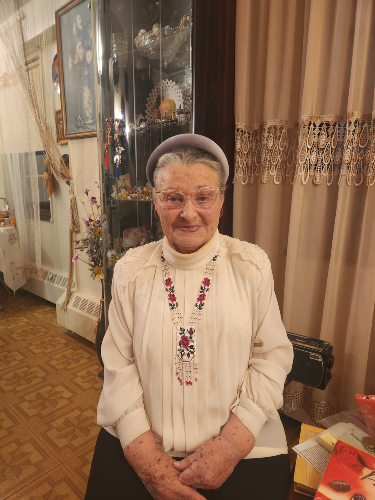
Sofya Lobova

Sofya Lobova (1935 – 2023)

“We went straight to Brooklyn. Then we got an apartment in Coney Island on Surf Avenue. My husband and I promptly went to Haber House Senior Center. Well, they said, “You need to help us." I, of course, loved being helpful with all my heart. That's how I grew up and that's how my parents raised me. There were many events held for the veterans. People wanted to talk, they wanted to talk about their fate. So, I held a series of these evenings when they talked about emigration, when they talked about the Holocaust, or where they had been. Those who were in the concentration camps brought the things that they saved. The mother of the head of the Haber House was in a German camp. And she brought a knitted shawl made of goat down, which she had preserved in the camp. Every person poured out their soul and these evenings became a habit.” – Sofya Lobova

Sofya Lobova was born in Kyiv in 1935 and immigrated to the U.S. in 1995. In her oral history, Lobova vividly describes her childhood memories of having to evacuate during World War II and her career working in Kyiv's Department of Culture. In Brooklyn, she became one of the leaders of the Russian-speaking community in Coney Island. Lobova was a longtime resident of NYCHA's Haber Houses and was the president of its senior center for many years.

Photo Credits:  Charles Denson (Perfetto), Julia Kanin (Lobova), Dan Pisark (Onorato), Fran Bass Serlin (Wofse), Samira Tazari (Torres)

posted Dec 18th, 2023 in News and tagged with In Memoriam, Eliot Wofse, Michael Onorato,...

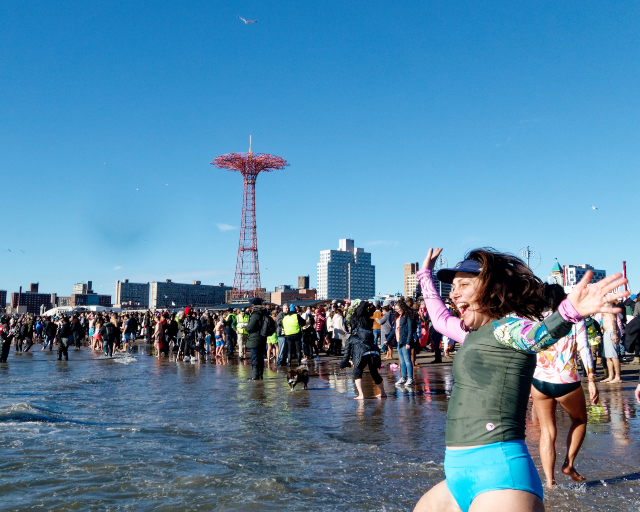
Coney Island Polar Bear Plunge Photo by Jim McDonnell

The fun place to be on New Year’s Day is Coney Island and the best way to welcome 2024 is with a dip in the Atlantic! Join the Coney Island Polar Bear Club for their 121st Annual New Year’s Day Plunge on January 1st from 11 AM until 2 PM. The party starts on the Boardwalk at 10 AM.

In an oral history recorded by the Coney Island History Project, Polar Bear Club president Dennis Thomas recalls the New Year's Day Plunge over the decades: "It's been going on as long as anybody knows and it used to be just kind of an informal gathering of the Polar Bear Club itself. Then more people from the public," says Thomas, who began swimming with the Bears in the 1970s. "When I first started, if there were a hundred people there, we'd say, wow, this was huge. It's a bucket list thing. People want to do it once in their life and New Year's Day is a great day to do that."

Around 4,000 people participated in the 2023 Plunge. There is no fee to participate but all funds raised help support local non-profits offering environmental, educational, and cultural programming including the Alliance for Coney Island, Coney Island History Project, Coney Island USA, Coney Island YMCA, New York Aquarium and more.

Please visit the event website to register in advance for the Coney Island New Year's Day Polar Plunge or make a donation.

Photo Credit: Jim McDonnell

posted Dec 17th, 2023 in Events and tagged with Coney Island Polar Bear Club, New Year's Day, Coney Island,...

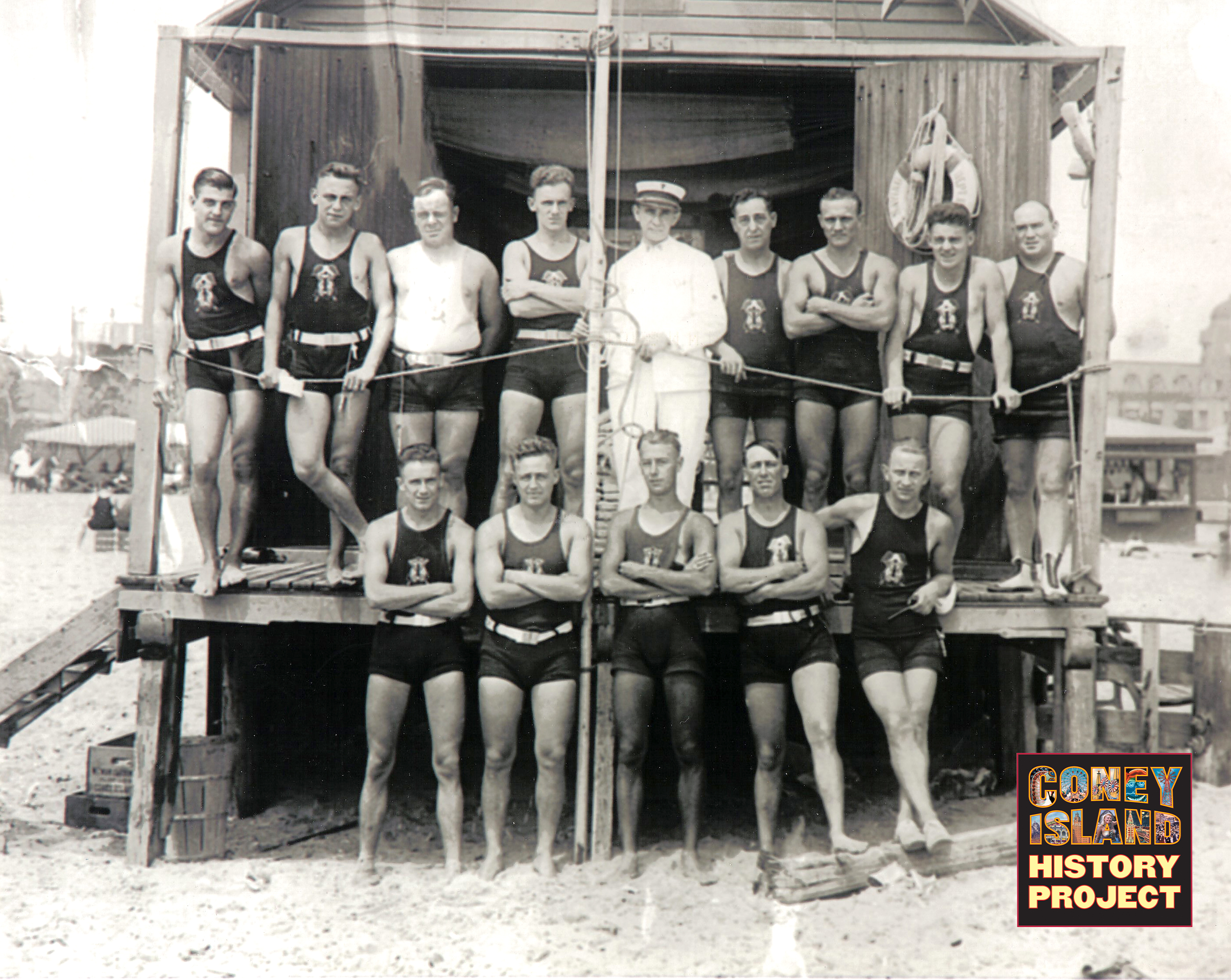
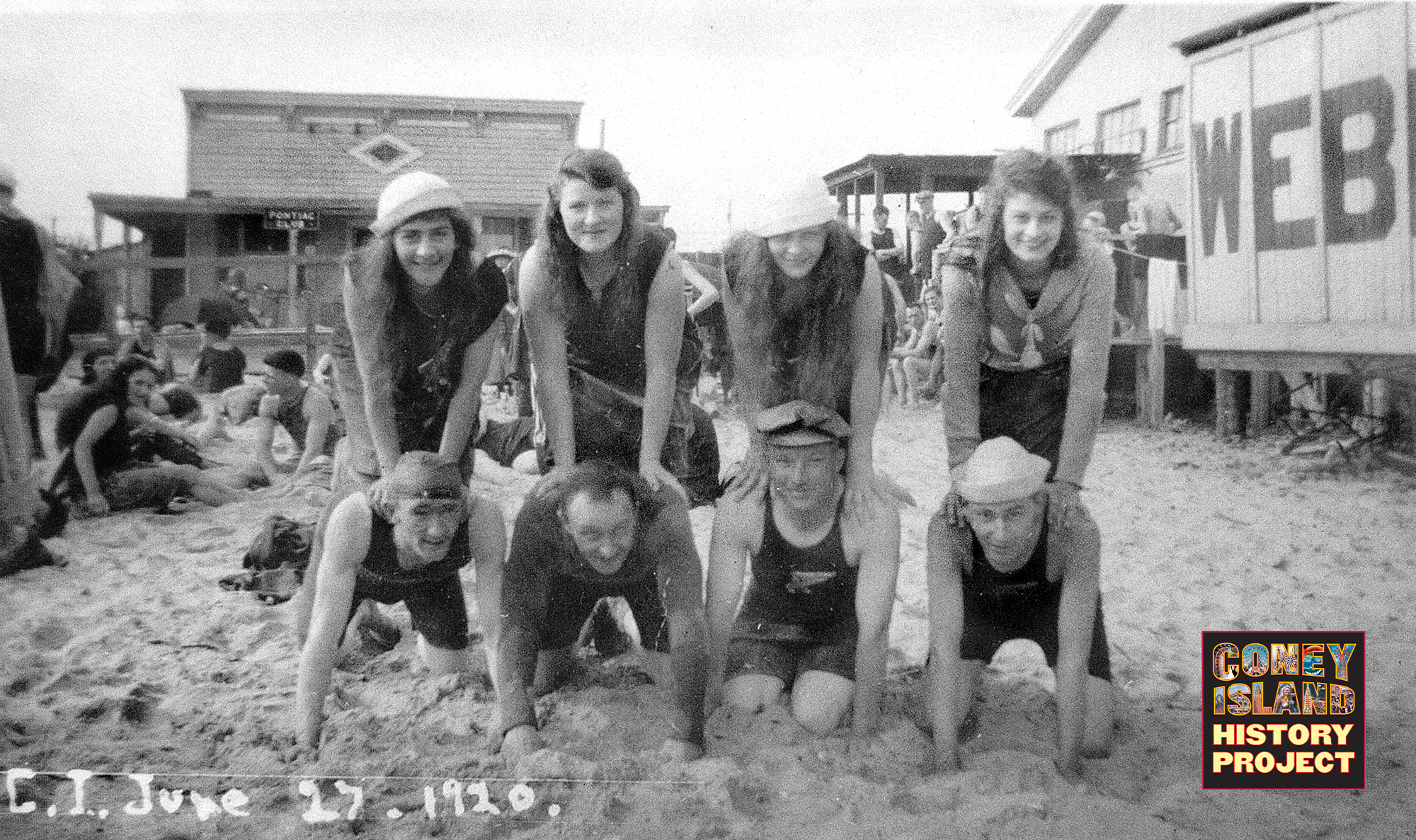
U.S. Volunteer Life Saving Corps lifeguards at their headquarters on the beach at West Fifth Street, Coney Island, c.1919.
The current lifeguard shortage in New York City brings to mind the history of lifeguards at Coney Island and the essential role that they play in public safety.

When ocean bathing gained popularity at the end of the 19th century, waves of New Yorkers began heading for Coney Island to seek relief from sweltering tenements. Few of them knew how to swim. The beach at that time was private property and there were no city lifeguards to protect swimmers.

Safety was provided by bathhouse owners who hired private lifeguards that for the most part were untrained and ineffective. There were no standards. Bathhouses hired men who worked cheap and “looked the part.” Former boxers, longshoremen, and weightlifters fit the bill. These unqualified guardians used primitive methods for resuscitation, such as “barrel-rolling,” (rolling a drowning victim over a barrel on its side to remove water from the lungs), a technique that caused more harm than good. Many private guards were drinkers and poor swimmers.

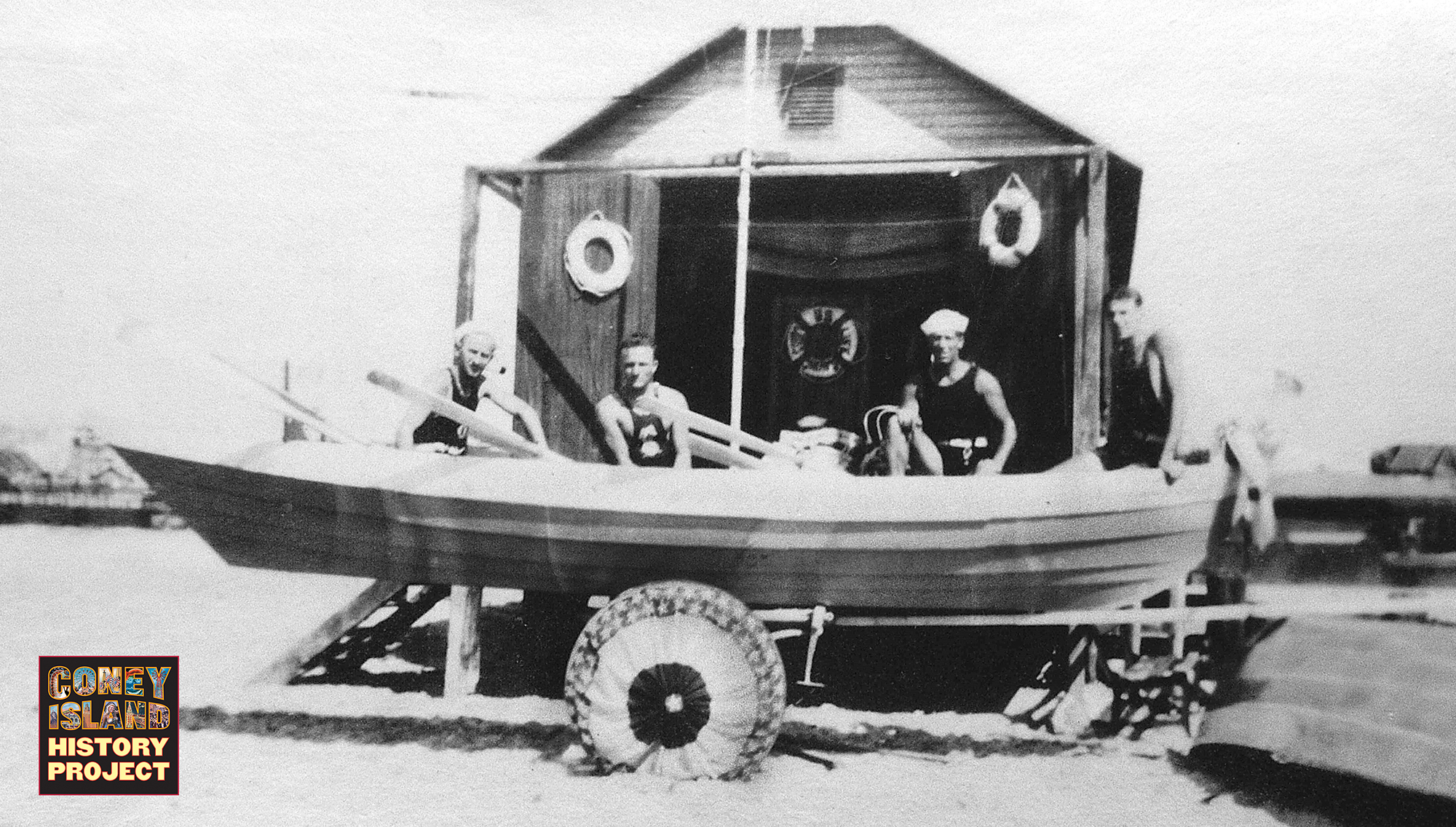
The United States Volunteer Life Saving Corps soon came to the rescue. Founded in 1872, the service established rescue stations all along New York City’s rivers and shorelines. Coney Island’s Volunteer Service life saving station was headquartered in a sturdily built wood-frame boathouse located on the beach at West Fifth  Street. 

At first the volunteers were met with hostility by the bathhouse lifeguards who saw them as competition and a threat to their jobs. They were finally accepted as swelling beach crowds made it obvious that private guards could no longer monitor the safety of hundreds of thousands of swimmers.

Many of the volunteers were WW I Navy veterans: competent, battle tested, and trained to rescue panicky drowning victims, shipwreck survivors, and even horses. They were also champion long-distance swimmers who participated in local contests. Thousands of Coney Island rescues were carefully documented by hand in logs, with the names, dates, and locations of all incidents. 

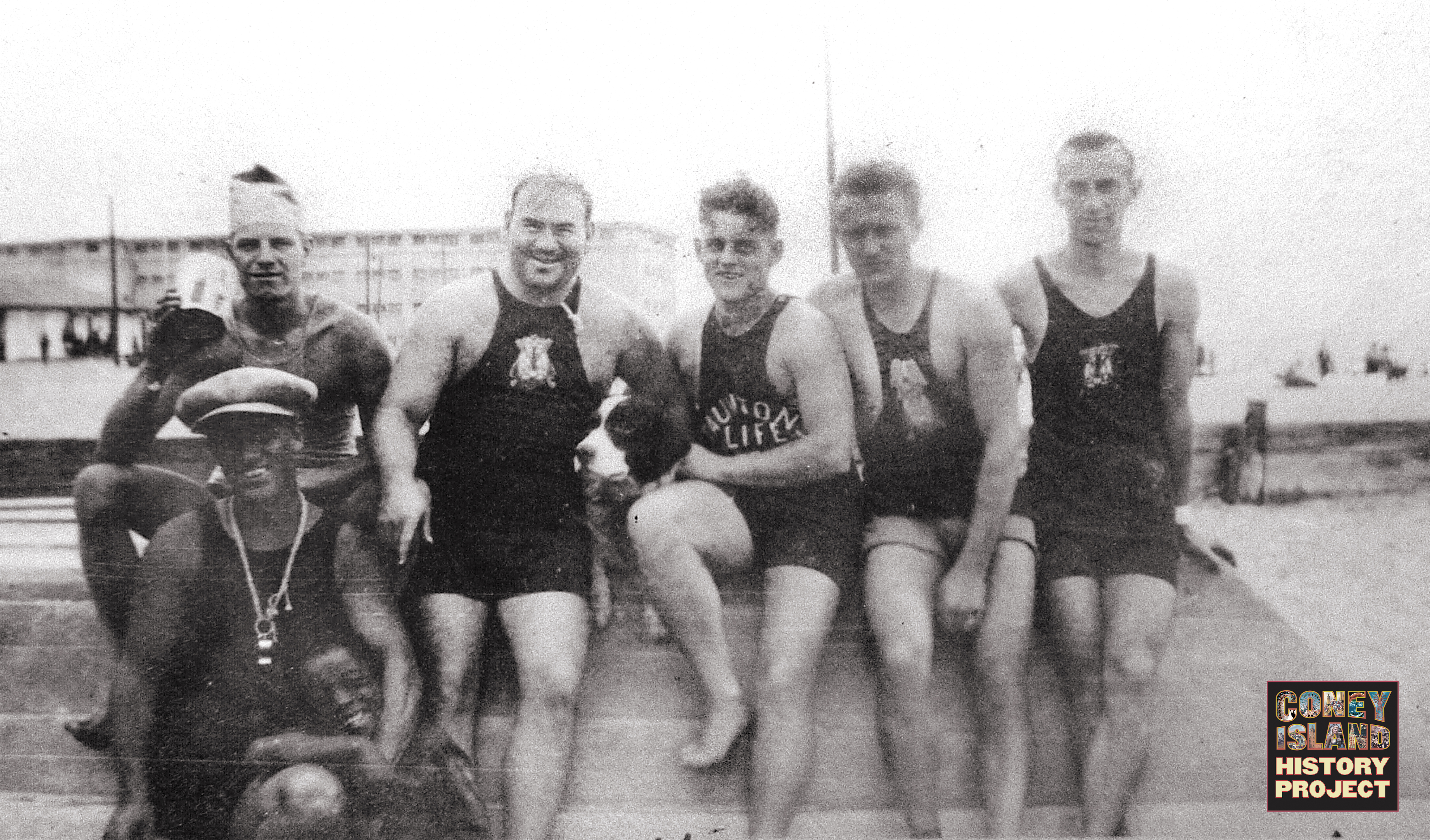
Ruth Hroncich’s grandfather, Ernest Gross, was a volunteer with the Service from 1919 to 1921, before the Coney Island beach became public. Ruth recently donated her grandparent’s photos to the Coney Island History Project. Ernest Gross lived on Neptune Avenue and met his wife, Ruth Atkinson in 1920 at Weber’s Baths in the West End. They were married in 1925. These family photos document the last days of the Volunteers before the Boardwalk was built and City lifeguards took over safety operations. 
– Charles Denson

Ernest and Ruth Gross, the couple third from left, at Weber's Baths, 1920.

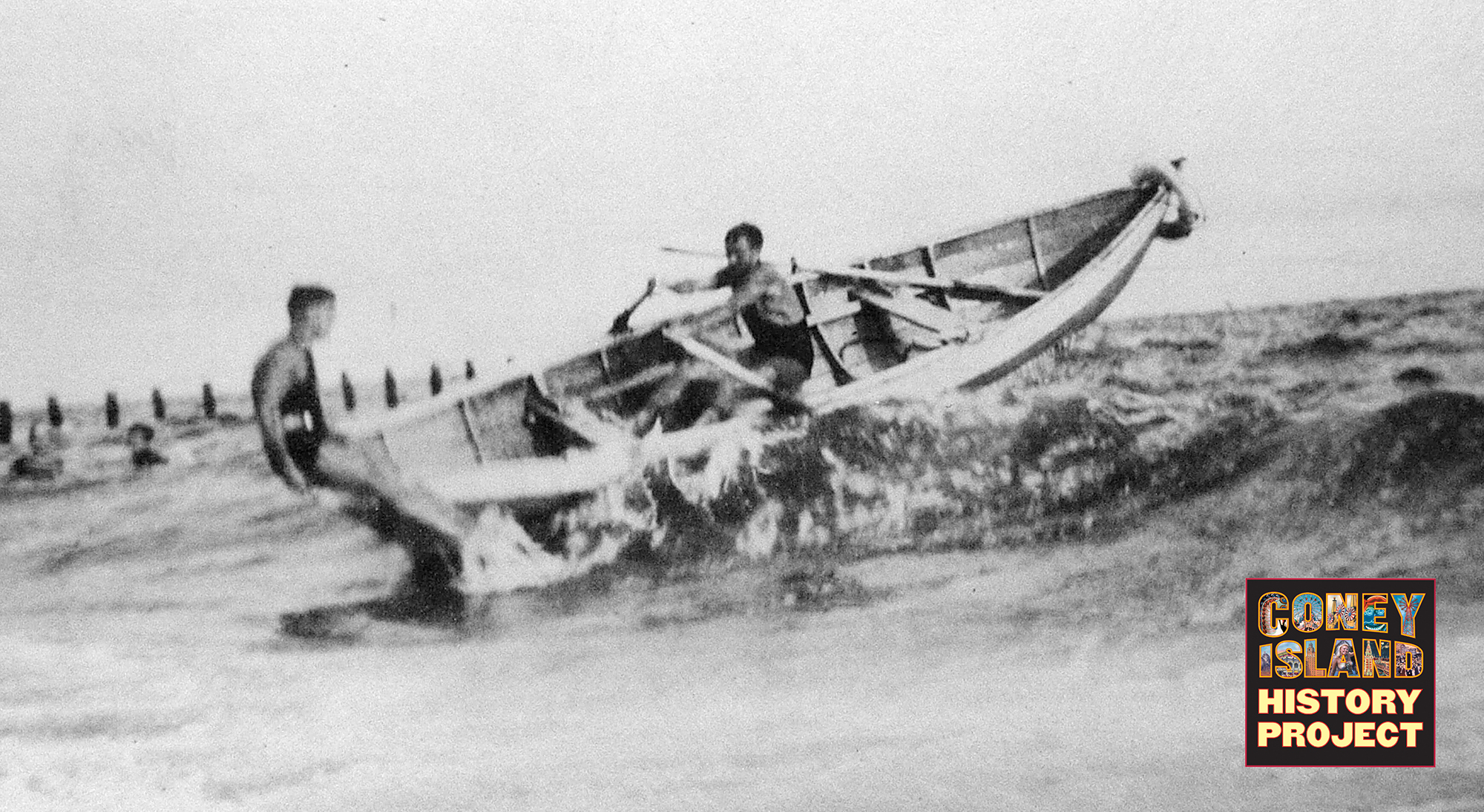
Navy veteran Ernest Gross is third from left in this picture.  The lifeguards would take the surf boat out every day and practice launching through the waves. 

Volunteer lifeguard surf boat in action at Coney Island.

Volunteer lifeguards on the Coney Island Beach, 1920. Ernest Gross is second from right. (Dog at center was not a lifeguard.) The Municipal Bathhouse can be seen behind them. Lifeguards at the Coney Island boathouse.
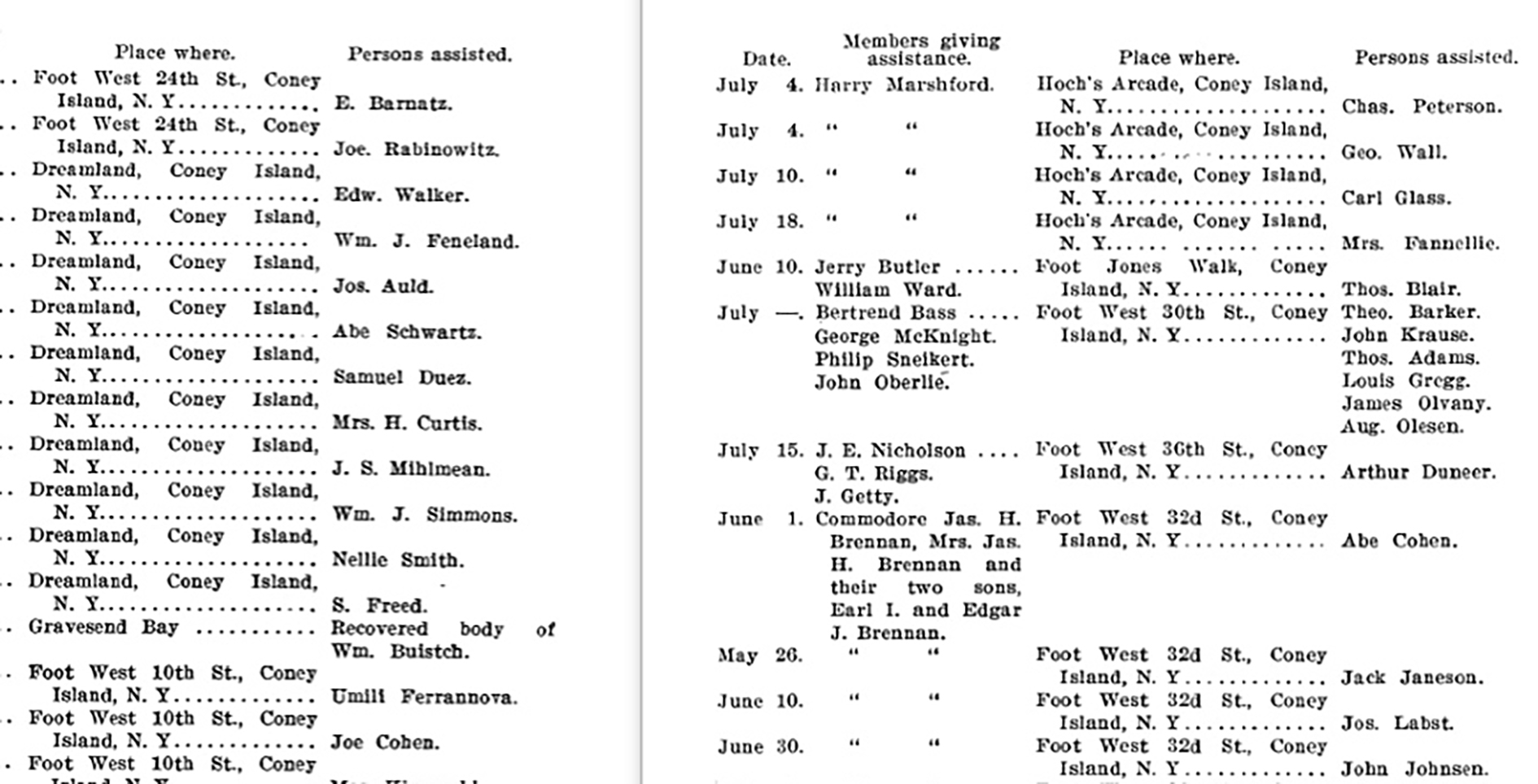
A page from the 1909 Volunteer log details rescues at locations ranging from Dreamland to West 32nd Street.


posted Jul 23rd, 2023 in By Charles Denson and tagged with lifeguards, New York City, history,...

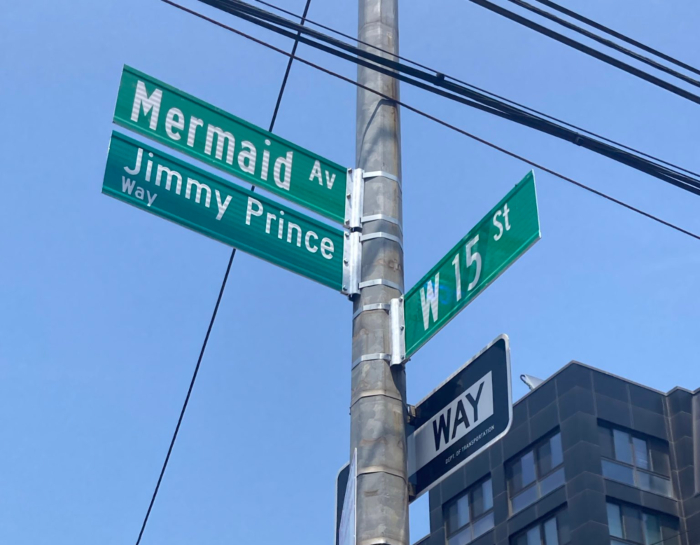
Charles Denson made this video, Jimmy Prince Way, to honor Jimmy’s street naming. This interview with Jimmy Prince (1932-2021) was recorded at his home in 2016, seven years after he retired from Major Market. "Mr. Major" remained as busy as ever in the community after the store closed, and also volunteered at the Coney Island History Project exhibit center on weekends.

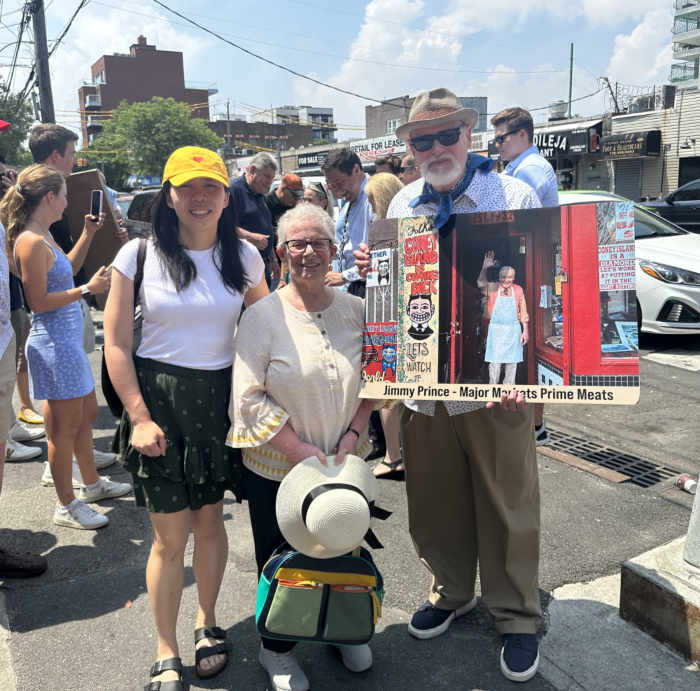
The corner of Mermaid Avenue and West 15th Street was co-named Jimmy Prince Way on July 8, 2023. Hosted by Coney Island Council Member Ari Kagan, the ceremony was attended by the Prince family and numerous community leaders and friends. Coney Island History Project board members Adele Cohen, Bonnie Kong, and Dan Pisark are pictured below with Charles Denson's photograph of Jimmy, "The Prince of Mermaid Avenue," in the doorway of his store.

Jimmy Prince Way

"Jimmy Prince was the kindest man in the world and the brightest light in Coney Island, a man who personified compassion, love and respect. There was no one else like him. He was born in 1932, the same year that Major Market opened on Mermaid Avenue and he began working at the market in June 1949 at the age of 18. Eventually he owned the store, and kept it open seven days a week, twelve hours a day until 2009. Jimmy became 'Mr. Major,' and his store became the heart of Coney Island, a refuge during hard times, where people came to find warmth and solace and nourishment. He was always positive and believed that Coney Island would survive." -- Charles Denson, "Remembering Jimmy Prince," May 25, 2021.

Photo credits: Council Member Ari Kagan, Bonnie Kong

Jimmy Prince Way

posted Jul 17th, 2023 in News and tagged with Jimmy Prince, Major Market, Mr. Major,...

Oral History Archive Coney Island History Project

More than 450 oral histories are available for listening in the Coney Island History Project’s multilingual online archive. Among the additions in May are the following interviews recorded for us by Daniel Gomez and Tricia Vita.

Ronald Kannatt, who is affectionately known as "The Prince of Coney Island," has been singing and dancing at Deno's Wonder Wheel Park's Karaoke on the Boardwalk for the past 20 years. He shares stories of his Coney Island karaoke "family," the most popular songs over the years, off-season Coney Island, and memories of the Jumbo Jet coaster and Lincoln High School.

Angela Kravtchenko, an architect who is a Coney Island resident and a community activist, describes how she and her family chose to live in Coney Island after emigrating from Ukraine in the 1990s and and how she became active in her community. She is a co-founder of the Friends of Asser Levy Park and a new member of Community Board 13.

JR Lopez shares memories of growing up in the 1990s in Coney's West End in the "Coconuts Building." He recalls playing football on the beach and basketball with block-specific teams, amusement rides such as the Enterprise and the Polar Express that are now history, and a summer job selling cold drinks on the beach as a teen.

Diana Wiener remembers growing up in Sea Gate and Coney Island in the 1940s and '50s, where she first learned to swim as a "water baby" on Beach 2 AKA "The Lagoon." Wiener remembers World War II blackouts, lookout towers for U-boats, artillery turrets, Quonset huts for Army personnel, and the celebration the day the Germans surrendered.

Please listen, share, and if you or someone you know would like to record a story remotely via phone or Zoom, sign up here. We record interviews in English, Russian, Chinese, and other languages with people who have lived or worked in Coney Island and adjacent neighborhoods or have a special connection to these places.
 

Salvation by the Sea Coney Island History Project

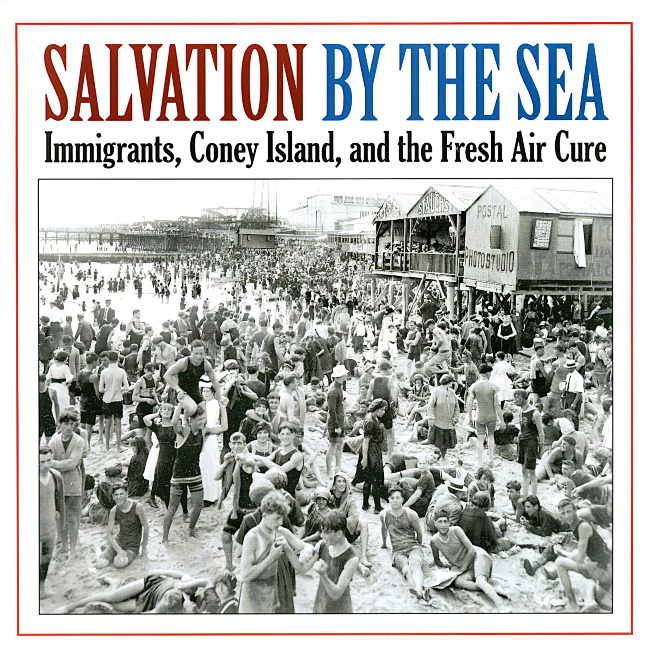
Join us on Saturday, June 3rd, during exhibition center hours to celebrate the publication of Salvation by the Sea: Immigrants, Coney Island, and The Fresh Air Cure by Charles Denson.

"This catalog explores a forgotten era of Coney Island's history by examining the role that the beachfront played in saving lives and providing a livelihood for the waves of immigrants who came to America between the 1870s and the 1920s," writes Charles Denson in the book, which is based on a 2019 exhibition at the Coney Island History Project.

During the late 1800s and early 1900s, four charities built sprawling seaside facilities at Coney Island supported by donations from the wealthiest of "Gilded Age" New Yorkers. The beachfront "homes" and hospitals provided immigrant mothers and their sick children with a respite from teeming, disease-filled tenements. The amusements and charities were able to coexist for nearly half a century. After the Boardwalk was built in 1923, the era of Seaside Homes came to an end.

On June 3rd, the Coney Island History Project exhibition center is open from 1:00 PM - 7:00 PM. Admission is free of charge. We're located at 3059 West 12th Street at the entrance to Deno's Wonder Wheel Park, just a few steps off the Boardwalk.

Immigrant Heritage Walking Tour of Coney Island

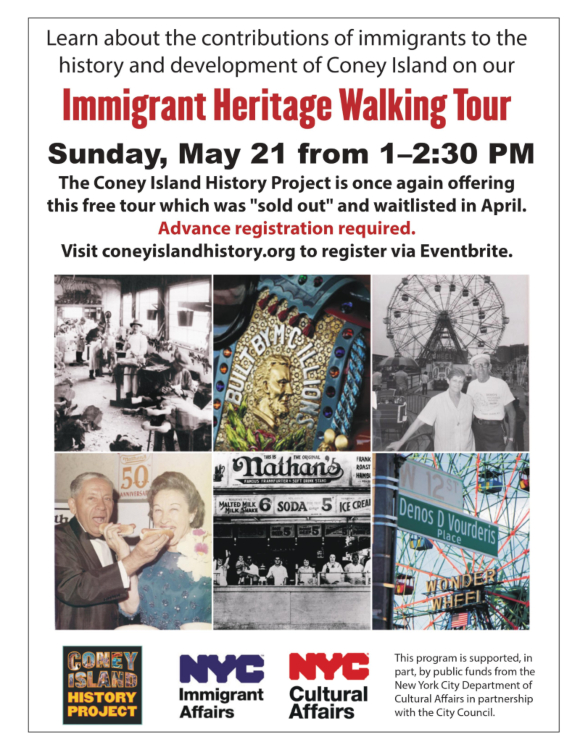
Join us on Sunday, May 21st, to learn about the contributions of immigrants to the history and development of "The Playground of the World" on our Immigrant Heritage Walking Tour of Coney Island. The Coney Island History Project is once again offering this free tour which was "sold out" and waitlisted in April during Immigrant Heritage Week 2023.

Among the stops on the tour and the stories of struggle, success and achievement are Nathan's Famous, founded in 1916 by Polish immigrant Nathan Handwerker; Deno's Wonder Wheel Park, where the landmark 1920 Wonder Wheel was purchased by Greek immigrant Denos D. Vourderis as a wedding ring for his wife Lula; and the B&B Carousell, created in 1919 by German and Russian immigrants and now Coney's last hand-carved wooden carousel. The tour will also highlight businesses operated by immigrants who have recorded their stories for the Coney Island History Project's Oral History Archive.

Coordinated by the Mayor's Office of Immigrant Affairs, Immigrant Heritage Week (IHW) is an annual citywide program of events celebrating the history, traditions and contributions of New York City's diverse immigrant communities. IHW 2023 was held April 17-23 in recognition of April 17, 1907, the date when more immigrants entered the U.S. through Ellis Island than any other date in history.

The May 21st tour starts at 1:00 PM. Please reserve free tickets in advance on our Eventbrite page. Ticket reservations are limited to 2 per person as capacity is limited. Meet at the Coney Island History Project, 3059 West 12th St (at 12th Street entrance to Wonder Wheel), Brooklyn NY 11224.

The tour takes 1 hour and 30 minutes. Walking tours are held rain or shine. We reserve the right to cancel tours in the event of potentially dangerous weather.

This program is supported, in part, by the New York City Department of Cultural Affairs in partnership with the City Council, and New York City Councilman Ari Kagan.

posted May 10th, 2023 in News and tagged with Coney Island History Project, Coney Island, Walking Tour,...

Coney Island History Project Oral History Archive
Nearly 450 oral histories are available for listening in the Coney Island History Project’s multilingual online archive. Among the additions in March and April are the following interviews recorded for us by Mary Conlon, Daniel Gomez, Julia Kanin, and Tricia Vita.

Erum Hanif talks about her work as a Community Board #13 Member and CEO of Apna Brooklyn Community Center, a not-for-profit that serves immigrants in Southern Brooklyn. She pays tribute to her mother, who was a pioneer in expanding education for girls and women in Pakistan. "I strongly believe that whatever I am today capable of doing in my life, personal and professional, is because of her spirit," says Hanif.

Sofya Lobova was born in Kyiv in 1935 and immigrated to the U.S. in 1995. Lobova recalls her memories of World War II and her community activism in Coney Island, where she is a longtime resident of NYCHA's Haber Houses. This interview was conducted and recorded in Russian and includes transcripts in Russian and English.

Sam Person shares family memories of Nat Faber's Fascination arcade, which operated on Surf Avenue from 1926 through the 1970s. Person worked in Coney Island as a manager at his father-in-law's Faber’s Fascination in 1953 and 1954 when he was in college. Fascination is a group game often described as combining the luck of bingo with the skill of Skee-Ball.

Sonia Solano reflects on raising a family in Coney Island and working in local schools in the 1990s and 2000s. She also describes the aftermath of Hurricane Sandy. "Coney Island means everything to me," says Solano. "I've been here thirty years."

Liz Unger shares memories of 1950's Coney Island and working in Lillian Candy Company, her family's candy factory on Mermaid Avenue. "I have a very, very soft spot in my heart for Coney Island, cause all my memories are there."

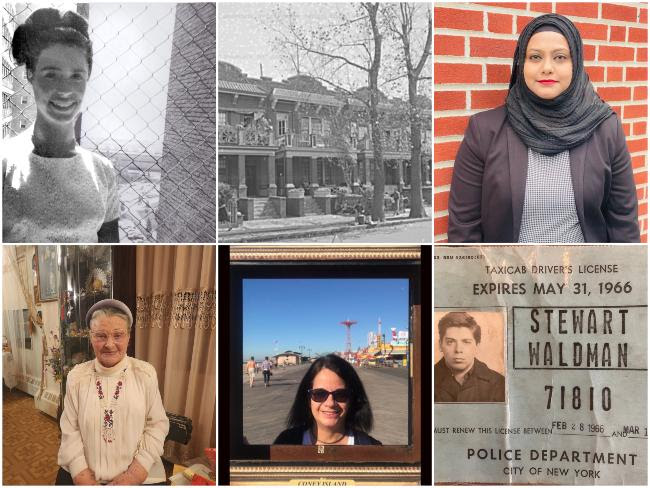
Stuart Waldman remembers summer jobs as a teen in Coney Island in the 1950s, including operating rides at Ward's Kiddie Park and working "The Dancing Dolls" game on Surf Avenue. At 19, he says he got his hack license and "aged out" of working in Coney Island.

Karen Wilcox recalls living in Luna Park Houses and going to Coney Island bathhouses with her grandmother in the 1960s. In 1962, Wilcox and her family were among the original tenants of Luna Park Houses, the apartment complex built on the site of the original Luna Park.

Please listen, share, and if you or someone you know would like to record a story remotely via phone or Zoom, sign up here. We record interviews in English, Russian, Chinese, and other languages with people who have lived or worked in Coney Island and adjacent neighborhoods or have a special connection to these places.

posted Apr 17th, 2023 in News and tagged with oral history, Archive, Coney Island History Project,...

Coney Island History Project International Womens Day

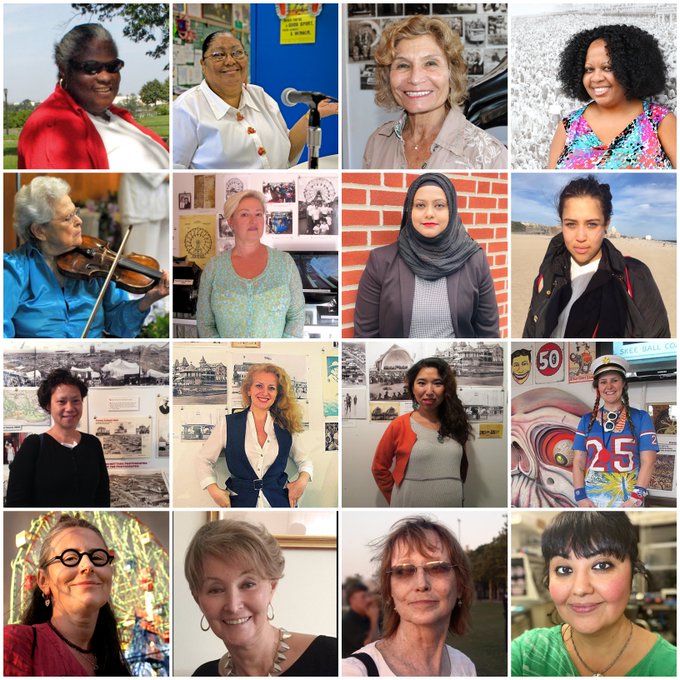
On International Womens Day we celebrate the women whose diverse voices are part of the Coney Island History Project's multilingual Oral History Archive. Share and preserve your Coney Island memories by recording an interview via phone or Zoom. We are recording interviews, both in English and other languages, with people who grew up, live or work in Coney Island and adjacent neighborhoods in Southern Brooklyn, or have a special connection to these places. Sign up here.

Coney Island History Show and Tell

You're invited to join us for “Coney Island History Show & Tell,” an interactive reminiscence event presented by the Coney Island History Project via Zoom on Thursday, March 16. Do you have historical or personal objects or stories related to Coney Island that you would like to share? Sign up to “show and tell” your story by emailing events@coneyislandhistory.org

This month's theme is Vanished Attractions. Among the attractions we’ll revisit are Steeplechase Park and Astroland, fun houses and dark rides, Fascination parlors, bungalow colonies, and the mechanical Laughing Lady. What made these vanished attractions so beloved, and why did they vanish? Can they be found outside of Coney Island? We’ll explore these and other questions.

Tickets for "Coney Island History Show & Tell" are free of charge. Advance registration is required and capacity is limited. Registrants will be sent the Zoom link two days before the event.

👉 Register via Eventbrite for Thursday, March 16 at 7:00PM - 8:00PM.

This program is supported, in part, by the New York City Department of Cultural Affairs in partnership with the City Council and New York City Councilman Ari Kagan.